Precision Inductor Design and Key Learnings
تفاصيل العمل
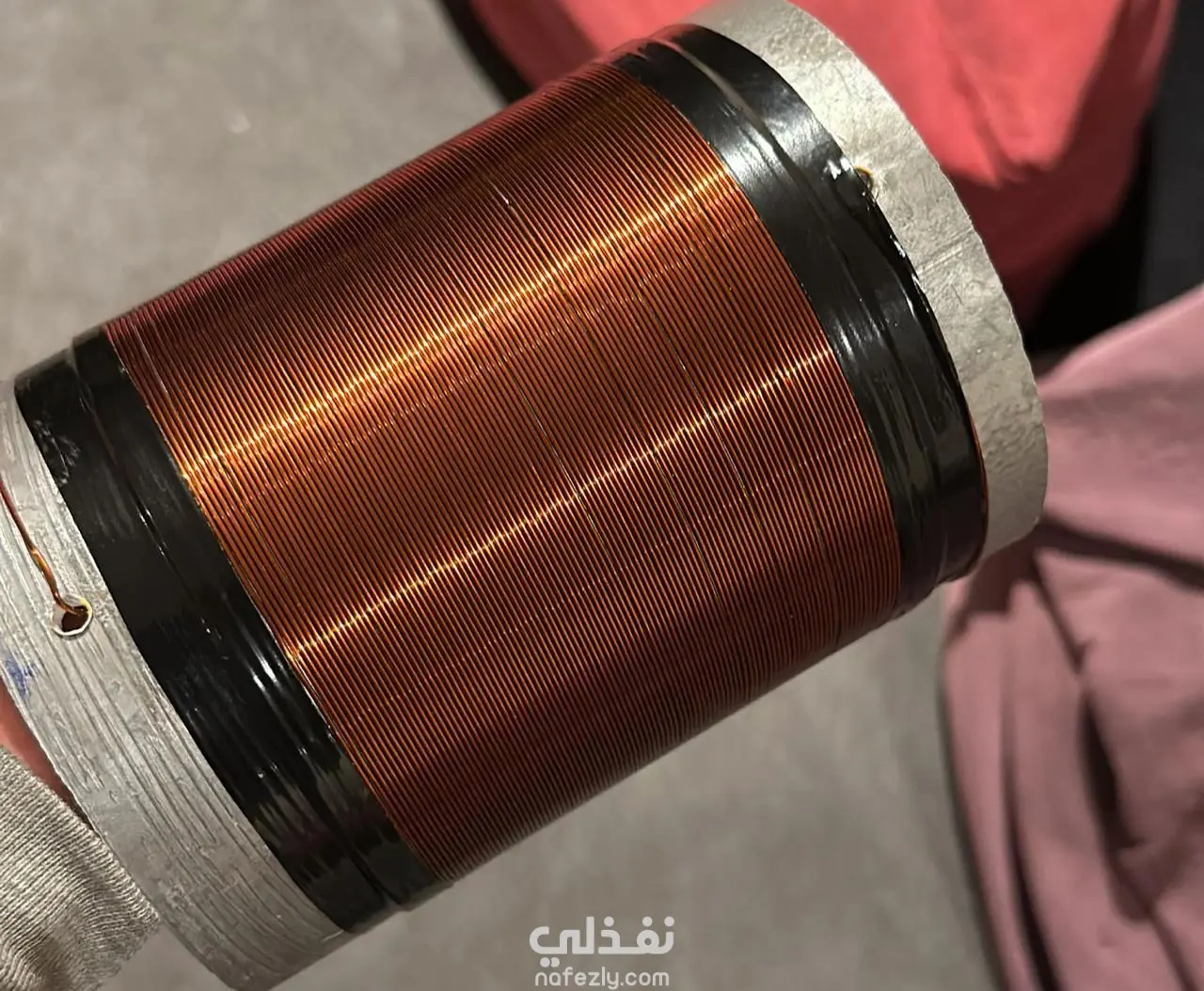
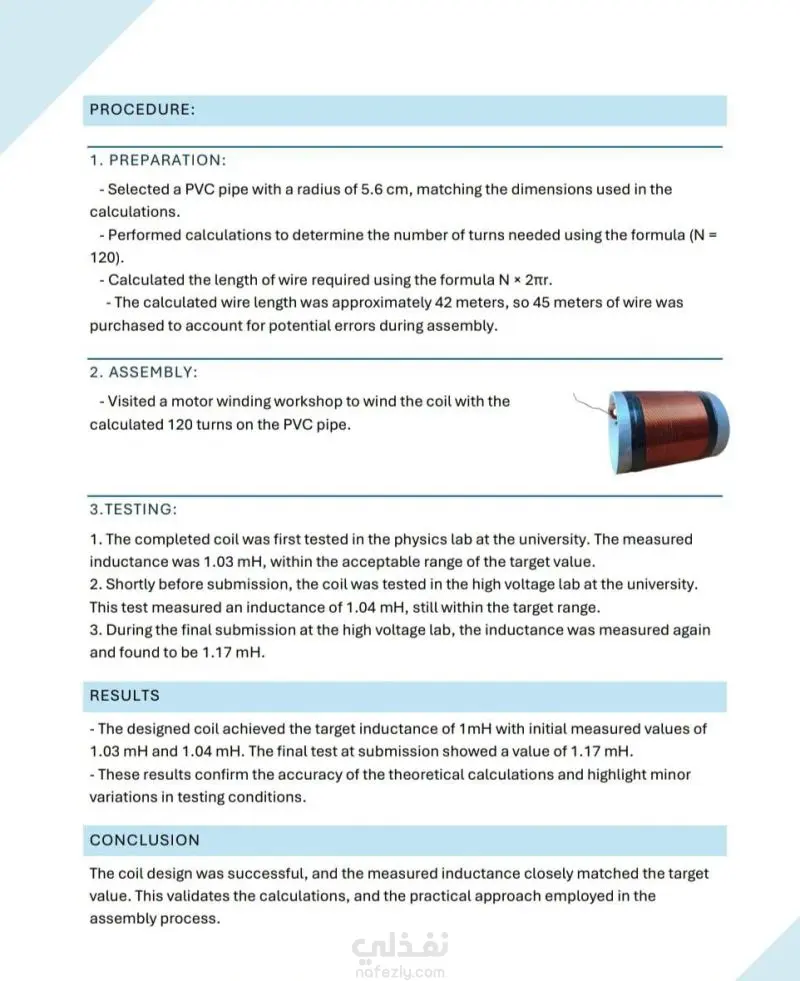
Recently, I worked on designing and assembling an inductor with a target inductance of 1mH. The project involved three key phases: Preparation: Calculating the required 120 turns and wire length while selecting a PVC pipe as the coil base. Assembly: Winding the coil in a motor winding workshop to ensure precise construction. Testing: Measuring the inductance in different lab environments. The recorded values (1.03mH, 1.04mH, and 1.17mH) remained within the expected range, validating the theoretical calculations and assembly accuracy. 🔹 This project was a great learning experience that reinforced both theoretical knowledge and practical skills. Here are some key takeaways: 1️⃣ Theoretical Validation – Applying formulas to calculate inductance and wire length helped me understand the importance of precise design. 2️⃣ Practical Implementation – Gaining hands-on experience in coil winding and assembly highlighted the role of precision in execution. 3️⃣ Testing & Analysis – Conducting tests in different lab environments showed how measurement variations occur and how to interpret results accurately. 4️⃣ Error Management – Learning to account for potential miscalculations and assembly imperfections helped in developing a structured approach. 5️⃣ Bridging Theory & Practice – Seeing how theoretical concepts translate into real-world applications strengthened my understanding of inductor behavior. 6️⃣ Lab Equipment Usage – Working with precision measurement tools in physics and high-voltage labs improved my ability to analyze electrical properties. This project highlighted the importance of combining theoretical analysis with hands-on application to achieve accurate results. Excited to apply these insights in future projects! 🚀
مهارات العمل