Obesity_Prediction
تفاصيل العمل
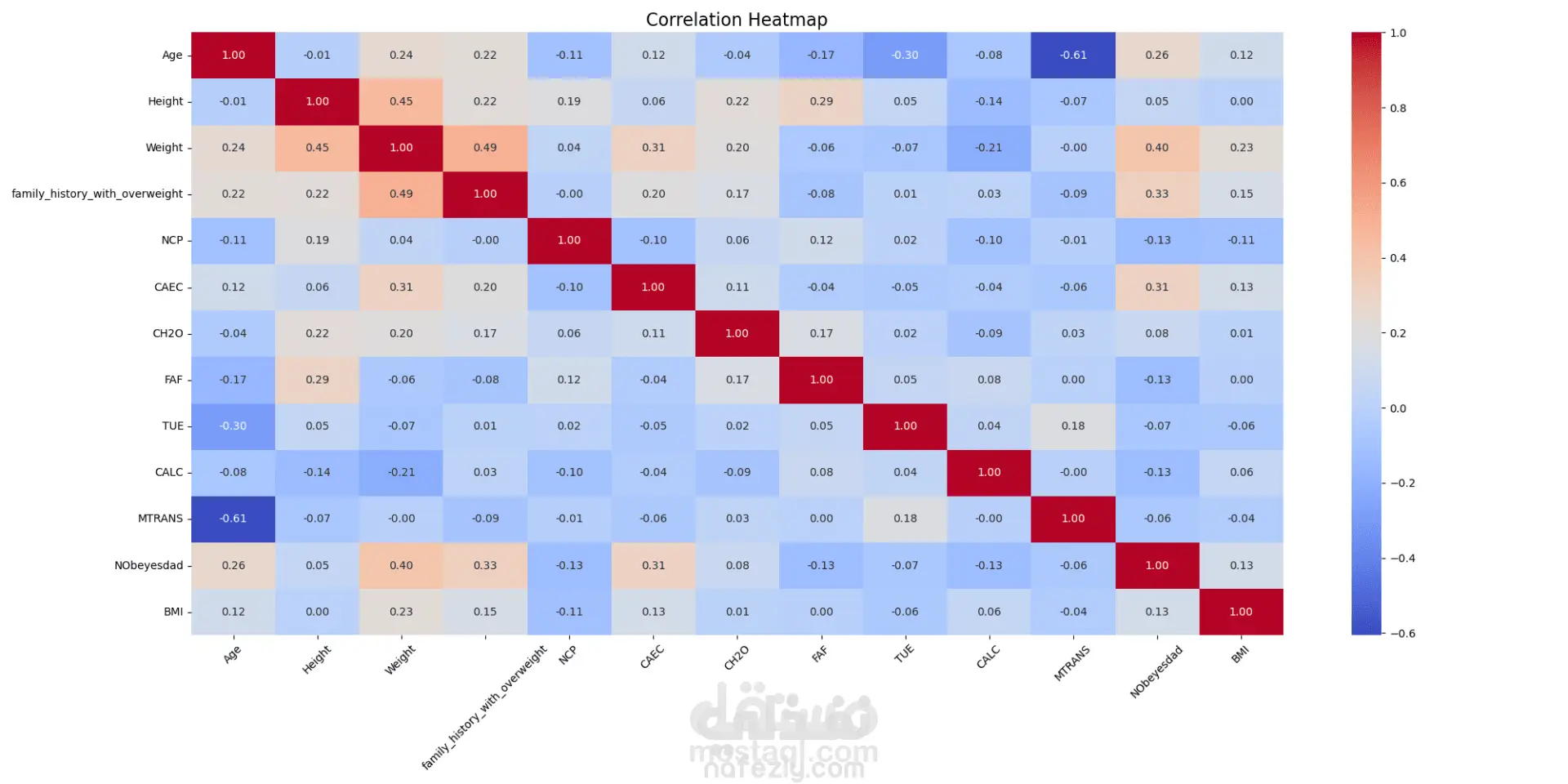
Obesity AI - Machine Learning Classification Project Project Overview This project implements a comprehensive machine learning solution for obesity classification using various algorithms. The system analyzes lifestyle and health data to predict obesity levels, providing insights for health professionals and individuals. Problem Statement Obesity is a significant global health concern. This project aims to: Classify individuals into different obesity categories based on lifestyle factors Provide accurate predictions using machine learning algorithms Help healthcare professionals assess obesity risk factors Enable individuals to understand their obesity classification Features Core Functionality Multi-class Classification: Predicts 7 different obesity categories Multiple ML Algorithms: Implements 4 different machine learning models Interactive Prediction: Command-line interface for real-time predictions Model Persistence: Saves trained models for future use Comprehensive Evaluation: Detailed performance metrics and analysis Obesity Categories Insufficient_Weight - Underweight individuals Normal_Weight - Healthy weight range Overweight_Level_I - Slightly overweight Overweight_Level_II - Moderately overweight Obesity_Type_I - Class I obesity Obesity_Type_II - Class II obesity Obesity_Type_III - Class III obesity (severe) Dataset Features The model uses 16 input features to predict obesity levels: Physical Attributes Age - Individual's age in years Height - Height in meters Weight - Weight in kilograms Lifestyle Factors FAVC - Frequent consumption of high caloric food (yes/no) FCVC - Frequency of consumption of vegetables (1-3 scale) NCP - Number of main meals (1-4) CAEC - Consumption of food between meals (Never/Sometimes/Frequently/Always) CH2O - Daily consumption of water (liters) FAF - Physical activity frequency (0-3 scale) TUE - Time using technology devices (hours) Health & Family History family_history_with_overweight - Family history of overweight (yes/no) SMOKE - Smoking habit (yes/no) SCC - Calorie consumption monitoring (yes/no) CALC - Consumption of alcohol (Never/Sometimes/Frequently) Transportation MTRANS - Transportation used (Automobile/Bike/Public_Transportation/Walking/Motorbike) Architecture Data Pipeline Data Loading - Training and test datasets Data Preprocessing - Handling missing values, encoding categorical variables Feature Engineering - BMI calculation, outlier handling Data Scaling - Standardization of numerical features Model Training - Multiple algorithm implementation Evaluation - Performance metrics and comparison Model Persistence - Saving trained models
مهارات العمل
بطاقة العمل

طلب عمل مماثل